

Electromagnetic Flow Meters — Precision You Can Measure
Electromagnetic flowmeters for conductive liquids across water, chemical, food & beverage, and industrial sectors — zero pressure drop, no moving parts, unmatched reliability. Request a Quote →
- Home
- Products
- Electromagnetic Flow Meters
What is an Electromagnetic Flow Meter?
The Series I3 combines signal conversion, isolation, and duplication in a single space-saving DIN rail module — built for reliable performance in demanding automation environments.
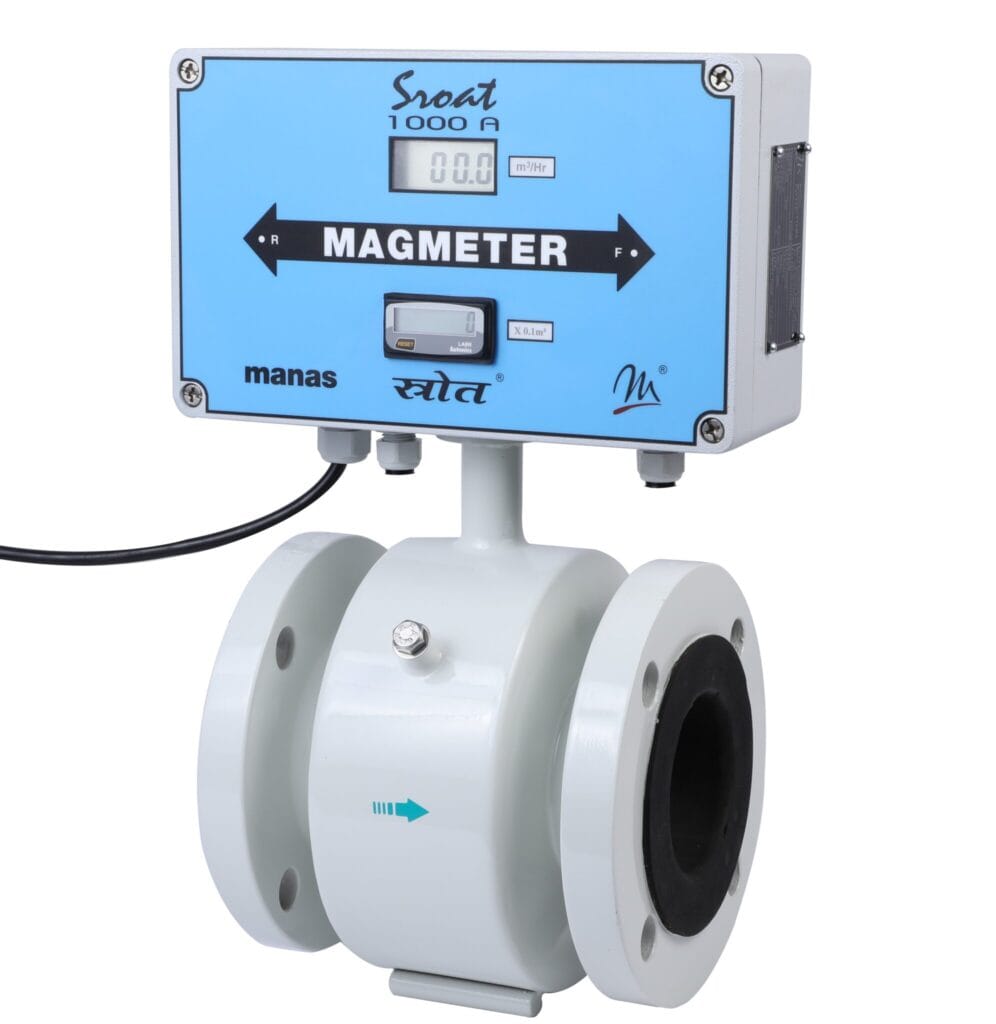
An electromagnetic flow meter — also called a magmeter or EM flowmeter — is a volumetric flow measurement device engineered for electrically conductive liquids. Unlike mechanical meters, it contains no moving parts inside the flow path, eliminating wear and tear and dramatically reducing long-term maintenance requirements.
The device consists of two primary components: a flow sensor (the flowtube) and a signal transmitter. The flowtube houses electromagnetic coils, electrode pairs, and an insulating liner. The transmitter processes the electrode signal and outputs flow data to your control system via industry-standard protocols such as 4–20 mA, HART, or Modbus RS-485.
Because the bore is fully unobstructed, an electromagnetic flow meter introduces virtually zero permanent pressure loss — a significant energy and cost advantage over orifice plates or turbine meters in long-running installations.
Two components, one reading: Flowtube (sensor, in-line) + Transmitter (signal processor, panel or integral mount).
How Does an Electromagnetic Flow Meter Work?
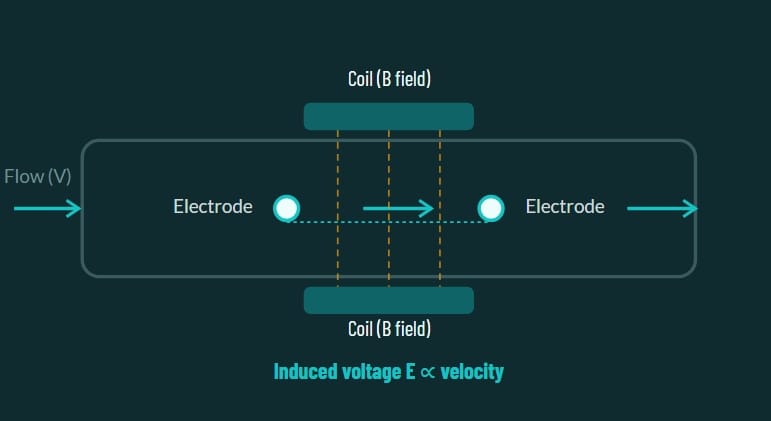
Electromagnetic flow meters operate entirely on Faraday’s Law of Electromagnetic Induction — a principle first described by physicist Michael Faraday in 1831.

Magnetic Field Generated
Electrical current flows through coils mounted inside the flowtube, creating a stable magnetic field across the full diameter of the pipe.
Conductive Fluid Flows Through
Charged particles in the conductive liquid move perpendicularly through the magnetic field, generating a small voltage directly proportional to their velocity.
Electrodes Detect the Voltage
Precision electrodes embedded in the liner wall pick up the induced voltage. The signal is clean, repeatable, and drift-free — unaffected by temperature, pressure, or viscosity.
Transmitter Outputs Flow Rate
The transmitter converts the electrode signal into a precise volumetric flow reading and sends it to your SCADA or DCS via 4–20 mA, HART, Modbus RS-485, or pulse output.
Standard Technical Parameters
The Series I3 combines signal conversion, isolation, and duplication in a single space-saving DIN rail module — built for reliable performance in demanding automation environments.
| Parameter | Value |
|---|---|
| Measurement Principle | Faraday’s Law of Electromagnetic Induction |
| Accuracy (Standard) | ±0.5% of reading |
| Accuracy (High-Performance) | ±0.2% of reading |
| Repeatability | ±0.1% |
| Flow Velocity Range | 0.3 – 10 m/s |
| Turndown Ratio | Up to 100:1 |
| Line Sizes | DN 10 to DN 3000 (½” to 120″) |
| Process Pressure | Up to 40 bar (standard flange); higher on request |
| Process Temperature | −40 °C to +180 °C (PTFE liner); up to +350 °C (ceramic) |
| Min. Fluid Conductivity | ≥ 5 µS/cm |
| Output Signals | 4–20 mA · HART · Modbus RS-485 · Pulse / Frequency |
| Protection Rating | IP65 / IP67 / IP68 |
| Straight Pipe Upstream | Minimum 5× pipe diameter (5D) |
| Straight Pipe Downstream | Minimum 3× pipe diameter (3D) |
Liner & Electrode Materials
Selecting the right liner and electrode combination is critical for chemical compatibility, abrasion resistance, and measurement accuracy. Both wetted components are available in multiple materials to match any process fluid.
Liner Material Guide
| Liner Material | Temp. Limit | Best Suited For | Industries |
|---|---|---|---|
| PTFE (Teflon®) | Up to 180 °C | Strong acids, alkalis, sodium hypochlorite, corrosive chemicals | Chemical, water treatment, pharmaceuticals |
| PFA | Up to 180 °C | High-purity and aggressive chemical fluids; excellent vacuum resistance | Semiconductor, chemical processing |
| Neoprene / EPDM | Up to 90 °C | Mild acids, water, wastewater, moderate chemical applications | Water & wastewater, general industry |
| Polyurethane | Up to 70 °C | High-abrasion slurries; sand, gravel, mineral suspensions | Mining, dredging, minerals processing |
| Ceramic (Al₂O₃) | Up to 350 °C | Very high temperatures; abrasive and corrosive media combined | Power generation, steel industry, paper mills |
Electrode Material Guide
| Electrode Material | Best For |
|---|---|
| 316L Stainless Steel | Most cost-effective. Excellent for water, wastewater, and mild chemicals. Standard choice for general-purpose installations. |
| Hastelloy C | Ideal for oxidising and reducing acids, chloride environments, and aggressive chemical dosing. Superior pitting and crevice-corrosion resistance. |
| Titanium | Outstanding resistance to chlorine, seawater, oxidising acids, and wet chlorine gas. Widely used in marine and chemical processing. |
| Tantalum | Among the most chemically resistant metals. Suited for highly concentrated acids and extreme chemical process environments. |
| Platinum–Iridium | Premium electrode for pharmaceutical, ultra-high-purity processes, and concentrated acid service where maximum performance is required. |
| Tungsten Carbide | Exceptional hardness for highly abrasive slurries containing sand, minerals, or solid particles. Common in mining operations. |
Where Electromagnetic Flow Meters Excel
Electromagnetic flow meters measure any electrically conductive liquid — from clean water to aggressive slurries — making them the most versatile flow measurement technology in industrial practice.
Water & Wastewater
Accurate monitoring of raw water intake, treated effluent, sludge lines, and chemical dosing. Resistant to biofouling and particulate-laden flows without clogging or performance degradation.
Chemical Processing
PTFE, PFA, and Hastelloy electrode combinations handle the most corrosive media in chemical plants, refineries, and pharmaceutical manufacturing — including concentrated acids and alkalis.
Food & Beverage
Food-grade liners and sanitary electrode finishes meet FDA and EHEDG requirements for dairy, beverage, CIP cleaning-in-place, and brewing applications. Hygienic designs available.
Mining & Minerals
Polyurethane liners and hard-faced electrodes withstand highly abrasive mineral slurries, tailings, and concentrate lines. Sized to maintain velocity above the settling threshold.
Pulp & Paper
Handles pulp stock, black liquor, white water, and bleach chemicals without clogging or mechanical failure — even in harsh pressure and temperature conditions found in recovery boiler circuits.
Oil & Gas / Power Generation
Measures cooling water circuits, produced water disposal, chemical injection, and wastewater discharge in power stations and upstream oil & gas facilities. Explosion-proof options available.
Electromagnetic Flow Meter Models Available
Model SROAT-1000
Full Bore Electromagnetic Flow Meter
DN 10 – DN 350
- Pulsed DC excitation
- IP68 sensor, IP67 transmitter
- PTFE / PFA / rubber / PU liners
- Weights & Measures approved
Model SS1002
Smart Electromagnetic Flow Meter
DN 10 – DN 600
- Advanced diagnostics, IoT-ready
- Self-diagnosis: empty pipe & electrode contamination
- HART & Modbus RS-485
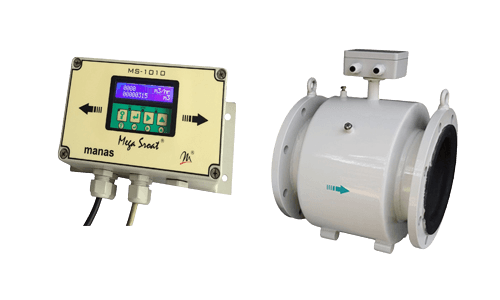
Model MEGA SROAT
Large Bore Electromagnetic Flow Meter
DN 400 – DN 1600
- For large water projects & municipal infrastructure
- Ebonite rubber lining
- IP68 rated, submerged / buried installation
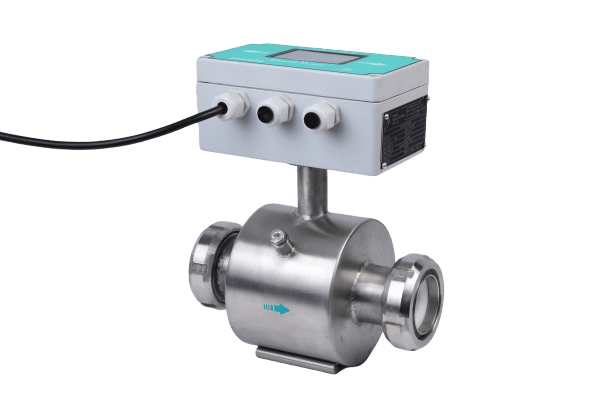
Model SG-SROAT
Sanitary / Food Grade Electromagnetic Flow Meter
SMS Union / Tri-Clamp
- Food-grade PTFE liner, SS316L electrodes
- FDA compatible
- Weights & Measures approved
- Milk tanker model available
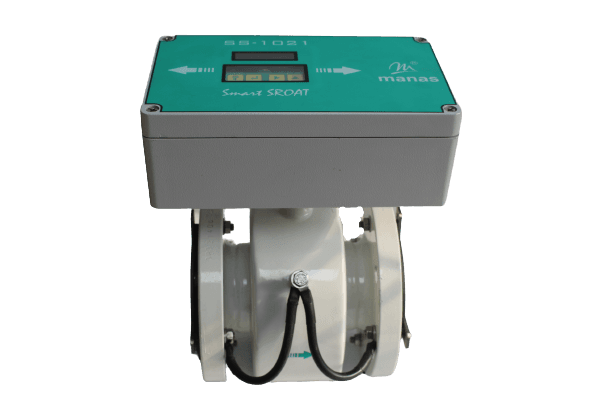
Model SS1020
Battery Operated Electromagnetic Flow Meter
Remote / Off-Grid
- Built-in NIMH battery (5+ year life)
- No mains power required
- Ideal for agricultural & underground installations
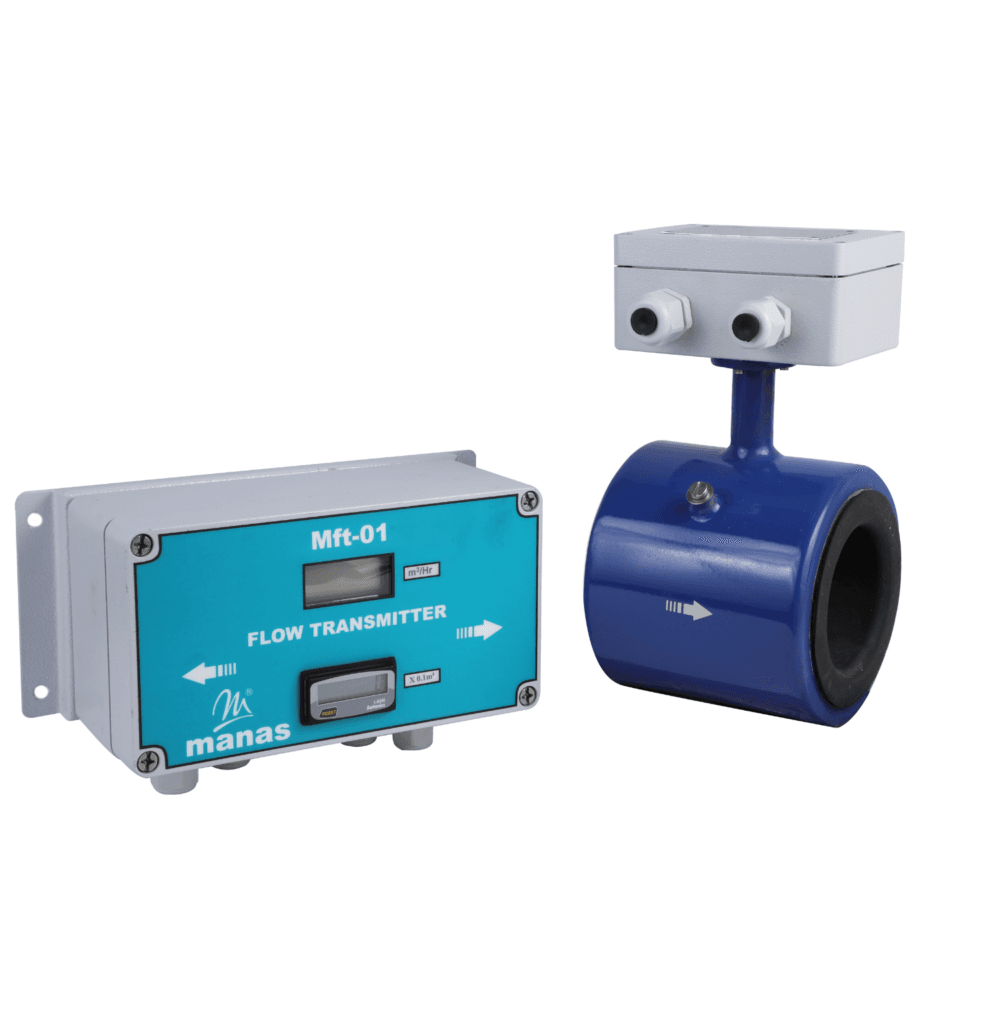
Model JAL-OAGH
Economical Wafer Style Electromagnetic Flow Meter
DN 50 – DN 200
- Compact & lightweight
- Ebonite & PTFE liners
- ±0.5% accuracy
- Wafer-style end connections

Baumer Sensor
Baumer Electromagnetic Flow Meters are advanced inline sensors that measure the volume and flow rate of electrically conductive liquids in industrial and hygienic systems.